
Why a responsive website matters more in Namibia than anywhere else
70% of Namibian web traffic is mobile. A site that breaks on a Samsung A14 isn't a small bug: it's most of your audience. Here's what to fix first.
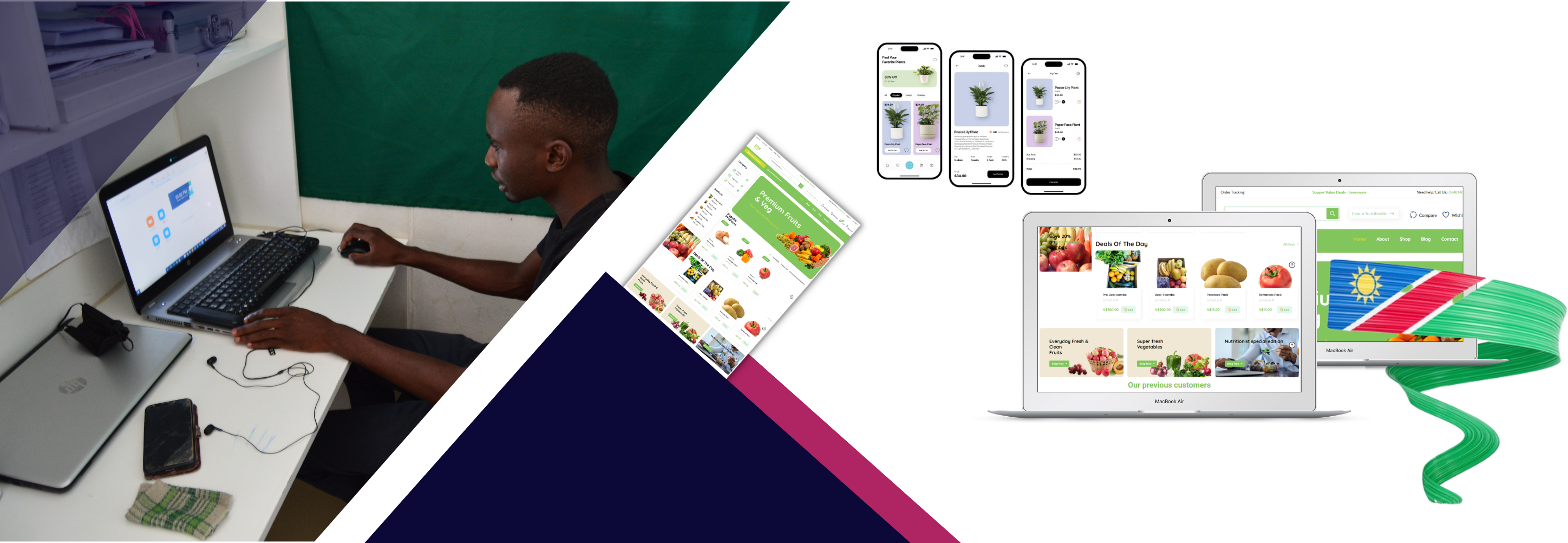
Roughly 70% of Namibian web traffic comes from mobile devices: higher than the global average and noticeably higher than South Africa. If your site only looks good on a 27-inch monitor, you're optimising for the smallest slice of your audience.
What responsive actually means
A truly responsive site isn't just a fluid grid. It's:
- Readable text without zooming on a 5-inch screen.
- Tap targets big enough for thumbs, not mice (44×44 px minimum).
- A working navigation that doesn't depend on hover.
- Forms that respect the mobile keyboard (correct input types, autofill hints).
- Images that don't blow your data bundle (modern formats, properly sized).
The Namibian mobile reality
Most Namibian visitors are on a mid-range Android (Samsung A-series, Tecno, Infinix) over a metered 4G connection. That changes what "performant" means. A 4 MB hero image isn't just slow, it's a few rand of someone's data bundle.
The fixes that move the needle
- Compress and serve modern image formats (WebP, AVIF). A good image pipeline cuts page weight by 60% with no visual loss.
- Defer JavaScript that isn't critical for the first paint.
- Cache aggressively at the edge: Cloudflare's free CDN is enough for most.
- Audit on real devices, not just Chrome DevTools. Borrow a colleague's mid-range Android.
What we measure
When we ship a site for a Namibian business, the SLA is: page weight under 1 MB, first contentful paint under 1.5s on 4G, Lighthouse mobile score 90+. Anything less and we keep working.
Want us to audit yours? Send the URL.